
Two-factor authentication goes by the more popular term 2FA and provides a level of redundant security that mimics redundancy used in military aircraft. A redundant system is a safety net that can perform the same task as a primary system. When the primary system fails, the redundant system takes over and enables the pilot to continue flying.
The follow are eight of the many great reasons why you need to use 2FA to enhance remote desktop (RDP) security:
- Two-factor authentication allows you to add an extra layer of security to your WordPress login. This section describes how to use it. “Two-factor authentication” is an additional login security feature which is used by banks, government agencies, and military worldwide. It is one of the most secure forms of remote system authentication.
- Shield WordPress Security. Shield WordPress Security (formerly Simple Firewall).
- There are a lot of different places to increase the security of a site, but the WordPress Security Team has said that “The weakest link in the security of anything you do online is your password,” so it makes sense to put energy into strengthening that aspect of your site. Top ↑ Drawbacks # Drawbacks.
The WP 2FA plugin supports the most commonly used and popular apps. In this page we are going to detail the process of how to setup and use any of the below mobile apps to work with WP 2FA for two-factor authentication on WordPress.
Passwords are extremely vulnerable
Wordpress 2fa Status
Passwords are the least effective means to protect a potentially vulnerable system but the one that people use the most. That adds up to a great deal of vulnerability. A dedicated hacker or hacking program can discover most passwords that protect various systems in about 6 hours, which makes it nearly impossible for a password-protected system to stay secure against a determined foe.
Passwords often are used over and over
Most people need passwords and personal identification numbers to access a variety of protected personal information, from credit card and bank balances to work accounts and more. Instead of using a separate password or PIN for each account, many people understandably use the same one for all accounts. That means a hack into one account can lead to a widespread hack into many and possible chaos.
Hacking program accelerate password discovery
Current hacking programs can run highly sophisticated algorithms that test millions of potential passwords every second. Such programs endlessly can continue searching for a correct password, which means a truly dedicated hacker can and will enter your system sooner or later if you only have password protection.
Adds more security layers
A 2FA system does much more than require a second password. Instead, it goes more deeply and can check IP addresses and similar data to help to affirm the location trying to access the system is a correct one. A more complicated secondary layer of protection against hacking. The person trying to connect still needs to provide at least two unique identifying responses to gain access while the program can affirm yet more relevant data to enhance the level of security.

Customized authentication

Instead of simply requesting an additional PIN or password, the 2FA system can require knowledge-based data, like a city of birth, mother’s maiden name, pet’s name, and a wide range of secondary protections. A rotating list of three to five personalized, knowledge-based responses make it less likely that a hacking program can breach your system.
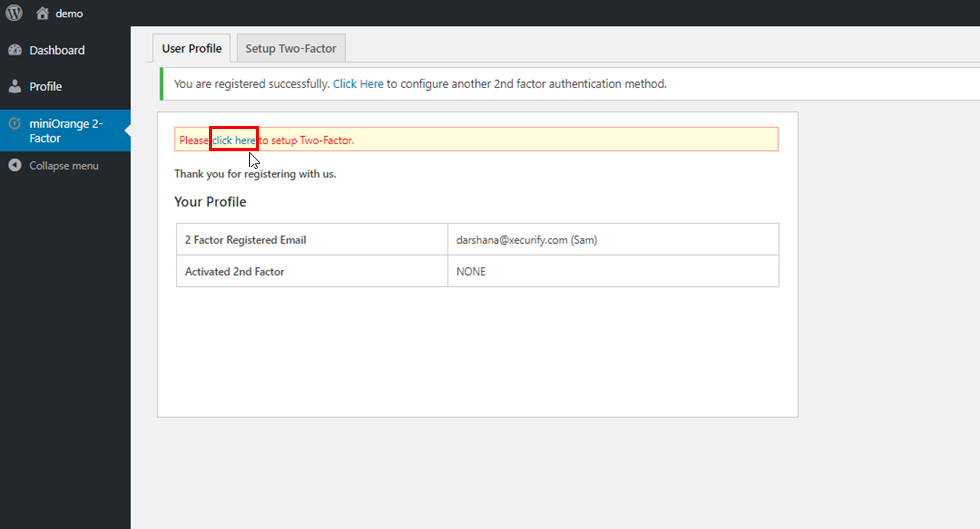
Wordpress 2fa Status
Increases productivity
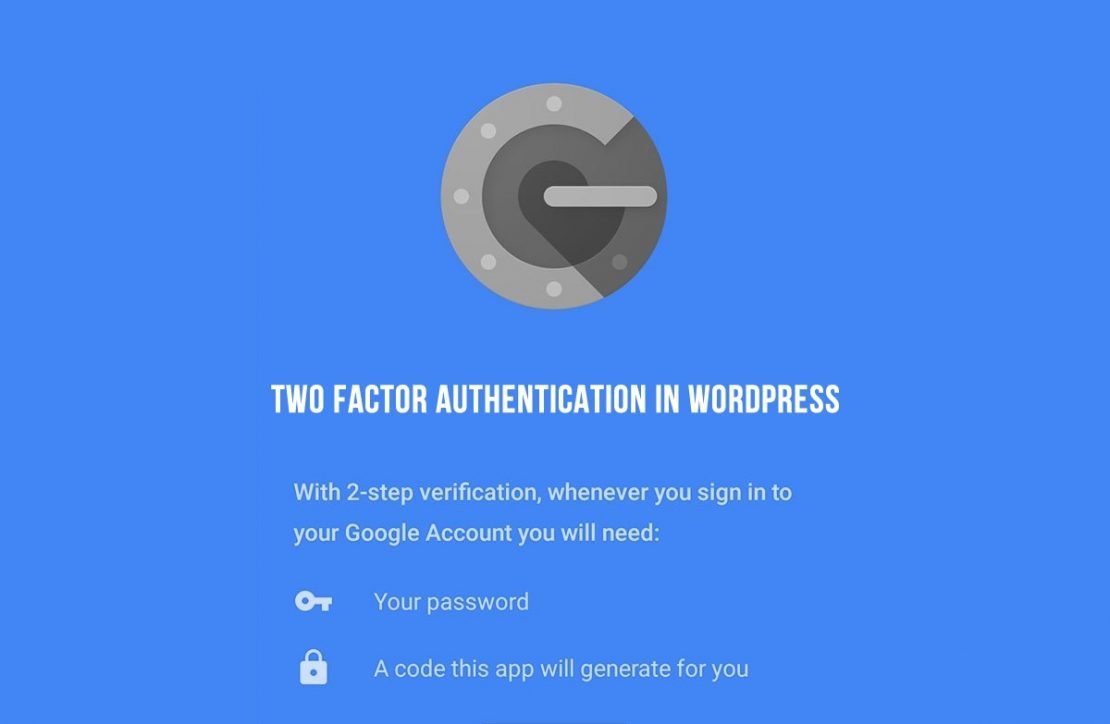
When you have 2FA configured on your RDP client, your remote work environment becomes much more secure. A more secure remote work environment means you do not need a large space from which to do business. Instead, you can network remotely and securely while boosting productivity. Greater productivity also means more exposures to potential external threats that your 2FA system helps to thwart.
Wordpress 2fa Plugins
Reduces costs
2FA goes a long way toward ensuring your network and connected computers are secure against external threats. Virtually eliminating security threats to your network and stored data helps to ensure productivity will continue unabated while eliminating any costs associated with fixing damage caused by an illegal entry into your computing system.
Thwarts fraud
Identity theft and similar fraud is on the rise and an ever-present danger to organizations and individuals alike. The enhanced RDP that a 2FA system provides is an effective defense against the rising tide of identity theft occurring in the United States and elsewhere.
The eight reasons listed above are just several of the many good reasons to use a 2FA system for RDP protection. The recent COVID-19 pandemic forced many job providers and organizations to switch to remote working environments.
The increased levels of remote work done to continue and increase productivity only makes systems more vulnerable to external threats. Without a suitable security protocol in place, consumers and organizations alike run a greater risk of loss due to hacking. A good 2FA system for RDP is a very efficient solution that undergoes continual improvements.
Two-factor authentication allows you to add an extra layer of security to your WordPress login. This section describes how to use it.
“Two-factor authentication” is an additional login security feature which is used by banks, government agencies, and military worldwide. It is one of the most secure forms of remote system authentication. It’s available from Wordfence for your WordPress website. This method of signing in to your website relies on something you know and something in your possession. That is why it is referred to as two-factor – because two factors are involved in authenticating you.
In this case you know your password and you are in possession of your cell phone or another authenticator device. If we can verify both of these, then we know that it’s okay to allow you to access your website. Wordfence two-factor authentication is designed to be used mainly by site administrators and those with high level access, e.g. users with publisher access, but is now also available for other roles if you choose. Two-factor authentication was previously a premium feature, but is now available to sites running the free version of Wordfence as well.
Wordfence 2FA now uses an authenticator app, such as Google Authenticator, to generate unique codes for you rather than relying on text messages.
Wordpress 2fa Yubikey
How to enable two-factor authentication
If your site uses the older version of two-factor authentication, see the Legacy Two-Factor Authentication page.
In Wordfence 7.3 and later, two-factor authentication uses an authenticator app for better security and reliability, instead of SMS / text messages.
First, choose an authenticator app to use, if you do not already have one installed on a cell phone or tablet. There are many available for iOS, Android, and other platforms, including:
- Google Authenticator
- Sophos Mobile Security
- FreeOTP Authenticator
- 1Password (mobile and desktop versions) See: 1Password help
- LastPass Authenticator
- Microsoft Authenticator
- Authy 2-Factor Authentication
- Any other authenticator app that supports Time-based One-Time Passwords (TOTP)
Wordpress 2fa With Microsoft Authenticator
Enabling two-factor authentication:
- Go to the Login Security page in your site’s wp-admin area
- For admins, this is on the Wordfence menu
- For other users, this is a separate menu with a Wordfence logo
- Open your authenticator app and add a new entry; most apps have a plus sign or a tiny QR code
- Scan the QR code on the login security page; your authenticator app should then display a six digit code
- If you are accessing a site on a phone or tablet and obviously can’t point the camera at its own screen, you can copy the line of letters and numbers below the QR code, and paste that in an app, using the app’s “manual” setup option
- In the “Download recovery codes” section, click the Download button
- Recovery codes can be used if you lose your device
- Print or save the file, and store it in a safe place
- Enter the six digit code that appears in your authenticator app
- This code changes every 30 seconds
- If the code expires, you can enter the next code instead
- Click the Activate button
That’s it! If this is your first time setting up 2FA on a site you may want to try logging in to the site in a different browser or in a private or incognito browser window to check for any compatibility issues before logging out.
How to log in with two-factor authentication
Steps to log in:
- Enter your username and password and click the “Log In” button, as usual
- When the “2FA Code” prompt appears, enter the code from your authenticator app
- If you use 2FA for multiple sites, be sure to pick the correct site
- Click the “Log In” button
If you have incompatible plugins or themes and can’t see the “2FA Code” prompt, or if you prefer a slightly quicker method, you can also enter a 2FA code directly after your password, in the same field:
- Enter your username and password, but do not click the “Log In” button yet
- Immediately after your password, enter the code from your authenticator app
- If you used the old Wordfence 2FA, note that you no longer need to enter a space or letters
- Example: For the password ‘mypass’ and code ‘233455’, enter ‘mypass233455’
- Click the “Log In” button
How to use recovery codes
The recovery codes that you saved or printed during setup can be used if you ever lose your authenticator device or if you remove the app or its saved codes by mistake. Make sure you store these codes in a safe place.
Because they don’t expire, recovery codes are longer than normal codes — 16 letters and numbers instead of only 6 numbers — but each code can only be used once. An example recovery code looks like this: 5199 5c24 77dc 0ed7
The login process is the same as using a code from an authenticator app:
- Enter your username and password and click the “Log In” button, as usual
- When the “2FA Code” prompt appears, enter a recovery code
- Remember, recovery codes are longer than regular 2FA codes
- In this example, we would enter: 5199 5c24 77dc 0ed7
- Click the “Log In” button
Each recovery code can only be used once. You can generate new recovery codes on the Login Security page of your site. This is useful if you have used most of your codes, or if you lose the codes you previously saved or printed. Generating new codes will invalidate the previous codes.
How to disable two-factor authentication
You can disable 2FA with a few clicks. This is useful if you want to switch to a new device or a different authenticator app, or if you need to help another user who is unable to log in. Of course, always confirm that the user you’re helping is really who they say they are!
If you need to disable 2FA on your own account:
- Log into your site and go to the Login Security page
- Click the Deactivate button.
If you need to disable 2FA for another user:
- Go to the WordPress “Users” page
- Hover over the user’s record and click the “2FA” link below their username
- This will take you to the Login Security page; near the top of the page, you will see “Editing User: their_username”
- Click Deactivate
Server Time
Wordpress Multi Factor Authentication
When you are logged in as an admin, the bottom of the Two-Factor Authentication page shows “Server Time” and “Browser Time”. Accuracy of the server time is important for “TOTP” authenticator apps.
If you have trouble setting up 2FA, you can check that the server time is correct. Browser time is included for your reference, though if your computer’s time is incorrect, it will only matter if you are generating codes on your computer. Wordfence Login Security attempts to correct the time by using a service called “NTP” if possible, but some hosts do not allow NTP connections.
Contents
Wordfence CentralDashboardFirewallBlockingScanToolsLogin SecurityAdvancedWordfence PremiumWordfence and GDPR - General Data Protection RegulationSite Cleaning and Security AuditsLogin Security PluginWordfence Service Status
Visit status.defiant.com to check the current status of Wordfence Services.
You care about what you build.
Protect your websites with the best security available.Want to know what our customers think?