
Opal is a hydrated amorphous form of silica (SiO 2 nH 2 O); its water content may range from 3 to 21% by weight, but is usually between 6 and 10%. Because of its amorphous character, it is classed as a mineraloid, unlike crystalline forms of silica, which are classed as minerals.
The exact origin of opal's name is disputed, but historians are confident that in ancient Rome opal was known as opalus which translates as the 'precious stone.' Was the opal the ancient Romans admired the same as the one we admire today? However, evidence of opal artifacts date as far back as 4000 B.C. Opal enables you to: Use the best primary antibodies, regardless of species – with no cross-reactivity; Identify multiple cell phenotypes while retaining spatial and morphological context that is lost with bulk measurements and flow cytometry.
Home » Gemstones » Opal » Ethiopian Opal
'Welo opal' is named after the Wollo Province of northern Ethiopia.
Author: Hobart M. King, PhD, GIA Graduate Gemologist
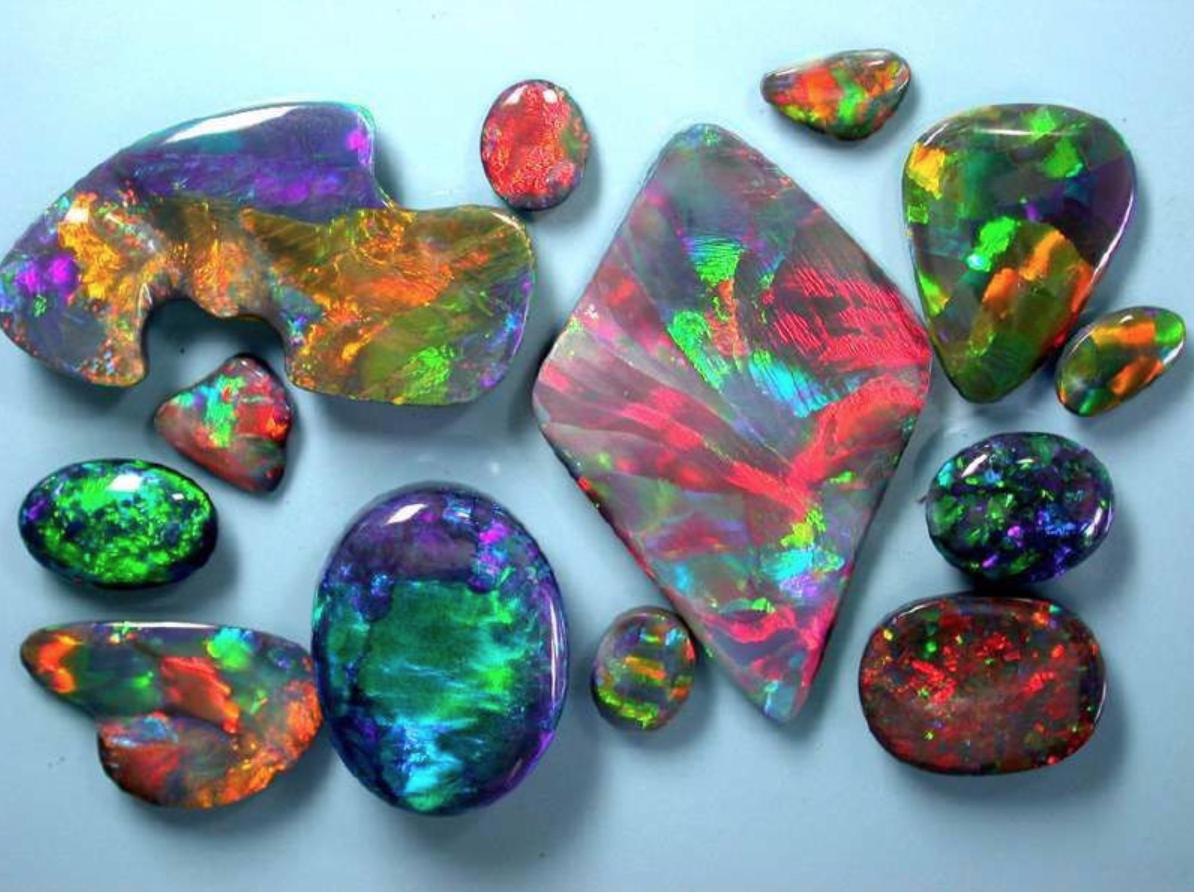
Ethiopian opal: Striking play-of-color in a cabochon of Ethiopian opal. Domains of bright color in a translucent to transparent opal is commonly seen in Welo opal.
The New Opal Heavyweight
Australia has been the dominant force in the opal market for over 100 years. During that time as much as 95% of the worldwide opal production has been mined in Australia. Today, Ethiopia is on its way to becoming the second heavyweight in the opal market.
A small discovery in 1994 put Ethiopia on the worldwide opal map. This was followed by important discoveries in 2008 and 2013. These are now producing beautiful precious opal, fire opal, and black opal with spectacular play-of-color in a variety of patterns and body colors.
Ethiopian opals are not only beautiful, but they generally cost less than similar-quality opal from Australia. People now go to the store looking for “Welo opals” or “Ethiopian opals.” They also use the internet and search for these opals by name. This surge of public awareness has developed in just a few years without a major mining company or jewelry brand spending millions of dollars to promote them. This popularity is being driven by the beauty of Ethiopian opal and their current attractive prices.
Faceted Ethiopian opal: Many translucent to transparent pieces of Ethiopian opal are faceted, such as these four small trillion-cut gems about 8 millimeters across.
Table of Contents
| The New Opal Heavyweight A Short History of Ethiopian Opal Welo 'Precious Fire Opals' Hydrophane Opals Ethiopian Opal Treatments Dye Treatment Smoke Treatment Sugar/Acid Treatment What’s the Future of Ethiopian Opals? |
Ethiopian opal beads: Beads are an especially popular product made from Ethiopian opal. The photo above shows a small sample of its diversity.
A Short History of Ethiopian Opal
Precious opal mined in Ethiopia began entering the gem and jewelry market in 1994. This opal originated from a discovery made in the Menz Gishe District in the northern part of the Shewa Province. Opal from this area occurs in a wide range of body colors. Much of the opal has a brown, red, or orange body color; however, yellow, white, and clear body colors are also found.
Shewa Province opal is found in stratified igneous rocks such as rhyolite, tuff, and ignimbrite. Although much of this opal has crazing problems, stable material enters the gem and jewelry market. These opals are often called “Shewa opals” or “Mezezo opals” after their locality of origin.
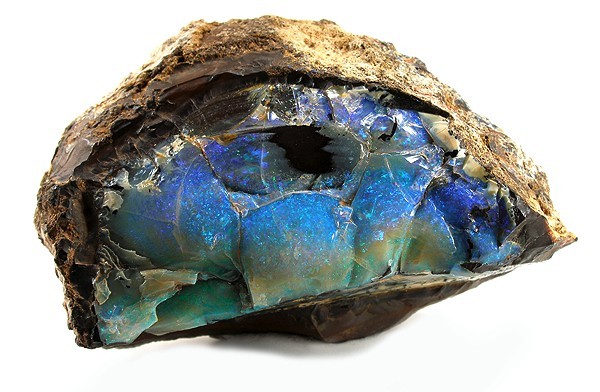
The most important opal discovery in Ethiopia to date was made in 2008 near the town of Wegel Tena in the Wollo Province in the northern part of the country. This opal can have vivid play-of-color flashing from a body color of clear, white, yellow, orange, or brown. It is more stable than the North Shewa opal. This material quickly became known in the trade as “welo opal,” but the names “wollo” and “wello” are also encountered.
Much of the welo opal is produced from a single area of stratified volcanic rocks. The main vein is an opalized rhyolitic ignimbrite up to one meter thick that overlies a base of clay. The opal likely formed as silica-bearing waters accumulated on top of the impermeable clay. Silica gel precipitated in the pore spaces of the ignimbrite and was later transformed into opal.
The seam outcrops along steep valley walls, where short horizontal tunnels are excavated to mine the opal. Underground mining here is very dangerous work, as the ignimbrite is often fractured, friable and poorly lithified. The seam can be traced along the valley walls where it is being mined, but its full geographic extent is unknown because the opal-bearing stratum is covered by up to 350 meters of stratified volcanic deposits. However, the deposit may extend over several kilometers and could become a major source of gem-quality opal. [1]
A third deposit was found in 2013, again in the Wollo Province, but about 100 kilometers north of the Wegel Tena area. Much of the opal in this deposit has a translucent gray to black body color. [3] It occurs in a seam of mineralized ignimbrite. The seam is in an extensive sequence of stratified volcanic rocks. It is up to 60 centimeters thick and rests atop of an impermeable clay. This deposit is also poorly defined but the seam can be traced along the steep valley walls. Current mining is by horizontal tunnels dug into the seam’s outcrop on steep hillsides.
Precious fire opal: Some of the opal produced from the Wollo Province has an orange, yellow or reddish body color along with play-of-color. The orange, yellow or reddish body color meets the definition of a fire opal, and the play-of-color meets the definition of a precious opal. Meeting both of these criteria, these opals could be called 'precious fire opals.'
Welo 'Precious Fire Opals'
Much of the opal produced from the Wollo Province has an orange, yellow or reddish body color along with play-of-color. The orange, yellow or reddish body color meets the definition of a fire opal, and the play-of-color meets the definition of a precious opal. Meeting both criteria, these opals could be called 'precious fire opals.'
The orange body color opal in the accompanying image is an example of one of these 'precious fire opals.' It has an orange body color, and if played in the light it has a play-of-color that flashes between electric green and purple. It is a beautiful example of Ethiopian opal.
This type of opal is quite abundant in the production currently coming out of the Wollo Province. It is transparent, like the example shown here, and that enables play-of-color deep within a bead, cabochon, or faceted stone to be visible.
Ethiopian opal: A nodule of dark body color opal from the Shewa Province of Ethiopia. Public domain image by Elade53.
Hydrophane Opals
Many of the opals mined in Ethiopia, especially from the Welo deposits, are hydrophane opals. 'Hydrophane' is a name used for a porous opal that has the ability to absorb water. A change in color or transparency often accompanies the water absorption. These opals typically have a lower specific gravity than other types of opal because of their porosity. Some of these opals can absorb enough water to produce a weight gain of up to 15%.
The hydrophane property of Ethiopian opals sometimes causes durability issues. The absorption of water can result in cracking. Because of that, owners of hydrophane opal should avoid immersing it in water. [2] They do not absorb water instantly. It may take several hours for the opal to absorb a significant amount of water. Hydrophane opal will dewater if allowed to dry, and the dewatering can occur in a few days to a few weeks. After dewatering, the opal will have the same appearance and properties as before the water was absorbed.
The hydrophane properties of these opals are important considerations when examining and purchasing rough or cut opals. Their stability, appearance and weight can all be altered by immersion in water.
Ethiopian Opal Treatments
Many Ethiopian opals are sold in their natural state, and some are treated. Their porosity makes them good candidates for dye, smoke, and sugar/acid treatments. All of these treatments, when disclosed, reduce the price of the opal to much less than natural opal with the same appearance. When undisclosed they can deceive inexperienced buyers and sometimes even experienced buyers.
Dyed Ethiopian opal beads: The hydrophane nature of much Ethiopian opal makes it easy to dye. A person who is familiar with opal will probably realize that the outrageous colors of these beads have been produced by dye. People who have seen a lot of opal might be fooled when dye is used to produce a more subtle and believable color.
Dye Treatment
Hydrophane opals, like those found in Ethiopia, are easy to dye because their porosity naturally absorbs liquids. People who know opal can identify dyed opal on-sight when an outrageous color is used. However, the practice of slightly enhancing an opal’s body color with dye can be much less obvious. In these cases, dye treatments can often be detected with microscopic examination or by cutting into the opal to see if the color is concentrated near the surface.
Some large buyers of cut opal or finished jewelry require vendors to provide samples of the opal rough when making large purchases. The samples are used for testing and comparison to assure that the finished stones and jewelry they are purchasing have not been treated. Color enhancements can increase the marketability and price of the opal if not obvious or disclosed. For this reason, if a buyer wants natural-color opal, testing to confirm that the color is not caused by dye is important.
Ethiopian opal with smoke treatment: The dark body color of this cabochon of Welo opal has been produced by smoke treatment. The smoke produces a dark body color that contrasts strongly with the opal's play-of-color.
Smoke Treatment
Smoke is a suspension of very fine particles in air or gas. Fine smoke particles can enter the pore spaces of opal and change its body color. The smoke treatment can be done by wrapping the opal in paper and heating the paper to a temperature that produces smoldering. The smoldering paper releases fine particles of black soot that enter the pores of the opal and darken its body color. The darker body color contrasts with the opal’s play-of-color, making it appear stronger and more obvious.
Smoke treatment can sometimes be detected by looking for black soot particles during microscopic examination. These can often be seen individually, or in concentrations along microfractures within the opal. Laboratory tests, such as Raman spectroscopy, have the ability to detect smoke treatment because they can detect carbon, which is normally absent in opals of volcanic origin.
Sugar/Acid Treatment
The sugar/acid treatment is done by soaking opal for a few days in a warm solution of sugar water, then submerging the opal in sulfuric acid. The acid oxidizes the sugar in the pore spaces of the opal, producing dark-colored carbon particles and stains. This imparts or darkens a gray, black, or brown body color in the opal. Like smoke treatment, these can often be detected by microscopic examination or by laboratory tests for carbon.
| Ethiopian Opal Information |
| [1] Play-of-Color Opal from Wegel Tena, Wollo Province, Ethiopia: Benjamin Rondeau, Emmanuel Fritsch, Francesco Mazzero, Jean-Pierre Gauthier, Bénédicte Cenki-Tok, Eyassu Bekele, and Eloïse Gaillou; Gems & Gemology, Volume 46, Number 2, pages 90-105, Summer 2010 Issue. [2] A Useful Technique to Confirm the Hydrophane Nature of Opal: Nathan Renfro; Gems & Gemology, Volume 49, Number 3, Fall 2013 Issue. [3] A New Deposit of Black Opal from Ethiopia: Lore Kiefert, Pierre Hardy, Tewodros Sintayehu, Begosew Abate, and Girma Woldetinsae; Gems & Gemology, Volume 50, Number 4, Winter 2014 Issue. |
What's the Future of Ethiopian Opals?
The future is very bright for Ethiopian opals. They are becoming much more visible in the gem and jewelry market, and the gem-buying public is becoming aware of them. All of this has occurred without a major mining company or jewelry brand spending millions of dollars to promote them. They occur in a variety of translucent to transparent basecolors with vivid play-of-color in a variety of patterns. They currently sell for very reasonable prices when compared to similar-appearance material from Australia. Significant amounts of Ethiopian opal are being produced and the country might become the first important challenger to Australian opal, which has dominated the world opal market for over 100 years.
| More From Geology.com |
| What is a Maar? |
| How did the Hawaiian Islands Form? |
| Mineral Rights |
| 10 Gemmy Facts About Spinel |
| Peridotite |
| Rock & Mineral Kits |
| Fluorescent Minerals |
| Turquoise |
|
| ||
|
| ||
|
| ||
|
|
Hi Welcome to Opal Auctions, the world’s leading industryopal website for all your opal requirements. Our verified opal miners andsellers offer opals direct from rough opals, opal specimens and a massive rangeopal stones to opal jewelry from all corners of the world.
We have over 140 approved opal sellers from over 2 dozencountries and have sold over 430,00 opals to 147 countries worldwide. We have over100,000 opal lovers as loyal members. Our sellers offer opals on a levelplaying field and have the industry’s most up to date information in the opalEncyclopedia. We also keep abreast of all the latest gemmological informationabout opals.
We strongly support the opal mining industry and members ofopal associations worldwide.
Opal Auctions has sold 430,000 individual Opals to all corners of the globe. Our entire Treasures Auctions network has now sold 1 Million items including Gemstones, Opals, Jewelry and Coins.
Opals for Sale
Our sellers must abide by stringent listing and descriptiondetails so that it is easy for our buyers to compare opals from each seller. Thisis a fantastic advantage for our buyers. After 30 years’ experience we knowthat opal miners and opal wholesalers have strong passion for their opals thatthey mine. Sellers must give accurate descriptions, images and videos mustinclude a hand shot and not just black images that make the opal look brighter.Only rough opal can be listed wet to show the opal colors.
Any Opal seller approved to sell on our website has been vetted in order to become one of our verified sellers.
We also find opal miners can price opals different dependingon production, if high production they list lower price but if the production islow their price increases. Opal buyers can now compare opal seller’s listingsand can follow our item watch, which is helpful to find what opals are actuallyselling for and helps buyers to follow price trends accurately.
Opal Sands
Online Opal Auction Categories
We offer buyers exact category descriptions by opal so it iseasy to search for a specific opal, opal type or even seller country. Also,buyers can search by sellers in certain country, as we have over 140 approvedopal sellers from all parts of the world.
Opal jewelry is also in exact category description so buyerscan search in confidence. Solid opals are separated out from Opal doublet or Opaltriplet jewelry.
Opal Sheriff
The Opal Sheriff program is managed by a panel of gemmologistsso our sellers are updated with all latest developments in the opal industry. Wedo not allow opals from Indonesia or Ethiopia to be called black opal, unlessan approved gemmological laboratory issue certification. Gemstone testinglaboratories also have to be approved by our Opal sheriff program.
Many Ethiopian opals are smoked or treated and our sellerswill supply accurate descriptions so that buyers can have confidence ourdescriptions are accurate to the highest standard. Black Opals are fromLightning Ridge and our sellers must have accurate description in regards toBody Tone as only body tone N1 to N4 is considered black Opal. A opal with N5to N6 is considered semi black or dark opal.
Investment Opals
Many buyers do ask is opal an investment? Founder WayneSedawie has seen red fire on black opals from lightning ridge increase by over20% per year in last 30 years. Today black opals are getting harder to findand no reason why they will not keep increasing as demand is so high for raregems and opals.

Opal Stone
New buyers can enjoy $10 Discount voucher on their first order for opal jewlery from opal rings, pendants, earrings or opal stones. Many repeat opal buyers resell in their country so most sellers offer reward program for long term repeat business who are offered discounts .
Treasure Auctions Network
You are visiting a site on the Treasure Auctions Network. Visit any of our sister sites below and get started right away using your login details.
Opalescence Go
Verification Programs
All sellers on Opal Auctions must comply with our Verified Sellers program which ensures a high degree of industry knowledge, consistent refund policy and wholesale pricing.
Opalescence Teeth Whitening
Opal Tometi
The Opal Sheriff program allows our members to request an audit on any auction, which is completed by an independent Gemologist who assesses the accuracy of the item description and pictures.