

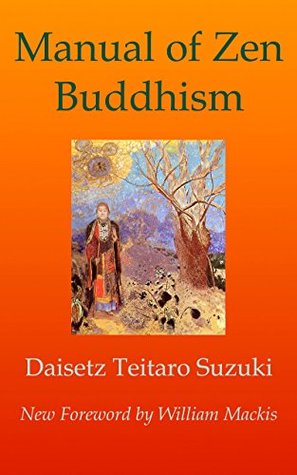
That is, a mind not fixed or occupied by thought or emotion and thus open to everything. It is translated by D.T. Suzuki as 'being free from mind-attachment'. Mushin is achieved when a person's mind is free from thoughts of anger, fear, or ego during combat or everyday life. There is an absence of discursive thought and judgment. By Daisetz Teitaro Suzuki 1957, copyright not renewed This is a study of Buddhist mysticism, contrasted and compared with Christian mysticism, particularly the writings of Meister Eckhart. Suzuki explores Buddhist and Christian concepts of infinity, eternity and the transmigration of souls. Daisetz Teitaro Suzuki (1870-1966) was a Japanese translator, teacher, and constructive interpreter of Zen Buddhist thought to the West. Teitaro Suzuki was born in Kanazawa in western Japan on October 18, 1870. His ancestors as well as his father, grandfather,.
Choosing belief over doubt has profound, eternal consequences for practicing Christians, while for religious Jews and Moslems alike, faith in God is the cornerstone of righteousness. Yet elsewhere in the world, revered spiritual traditions exist in which the struggle between belief and unbelief is of little importance. Daisetz Teitaro Suzuki is an eloquent international spokesman for one of these traditions: the Japanese variant of Buddhism known as Zen. A widely traveled Japanese scholar, Suzuki taught in that country's university system, translated several Eastern philosophical works into English, and corresponded widely with Christian contemplatives such as Thomas Merton. Through his books and lectures, Suzuki became Zen's leading voice in America during the mid-20th century. His Introduction to Zen Buddhism, published in 1956, not only offers an overview of the historical background of Zen philosophy and practice, but succeeds in conveying something of its seemingly inexpressible essence.
Daisetz Teitaro Suzuki


From An Introduction to Zen Buddhism
Daisetz Teitaro Suzuki Quotes

Daisetsu Teitaro Suzuki Quotes
Is Zen a religion? It is not a religion in the sense that the term is popularly understood; for Zen has no God to worship, no ceremonial rites to observe, no future abode to which the dead are destined, and, last of all, Zen has no soul whose welfare is to be looked after by somebody else and whose immortality is a matter of intense concern with some people. Zen is free from all these dogmatic and 'religious' encumbrances. ...
Zen Suzuki
As to all those images of various Buddhas and Bodhisattvas and Devas and other beings that one comes across in Zen temples, they are like so many pieces of wood or stone or metal; they are like camellias, azaleas, or stone lanterns in my garden. Make obeisance to the camellia now in full bloom, and worship it if you like, Zen would say. There is as much religion in so doing as in bowing to the various Buddhist gods, or as sprinkling holy water, or as participating in the Lord's Supper. All those pious deeds considered to be meritorious or sanctifying by most so-called religiously minded people are artificialities in the eyes of Zen. It boldly declares that 'the immaculate Yogins do not enter Nirvana and the precept-violating monks do not go to hell'. This, to ordinary minds, is a contradiction of the common law of moral life, but herein lies the truth and the life of Zen. Zen is the spirit of a man. Zen believes in its inner purity and goodness. Whatever is superadded or violently torn away, injures the wholesomeness of the spirit. Zen, therefore, is emphatically against all religious conventionalism. ...